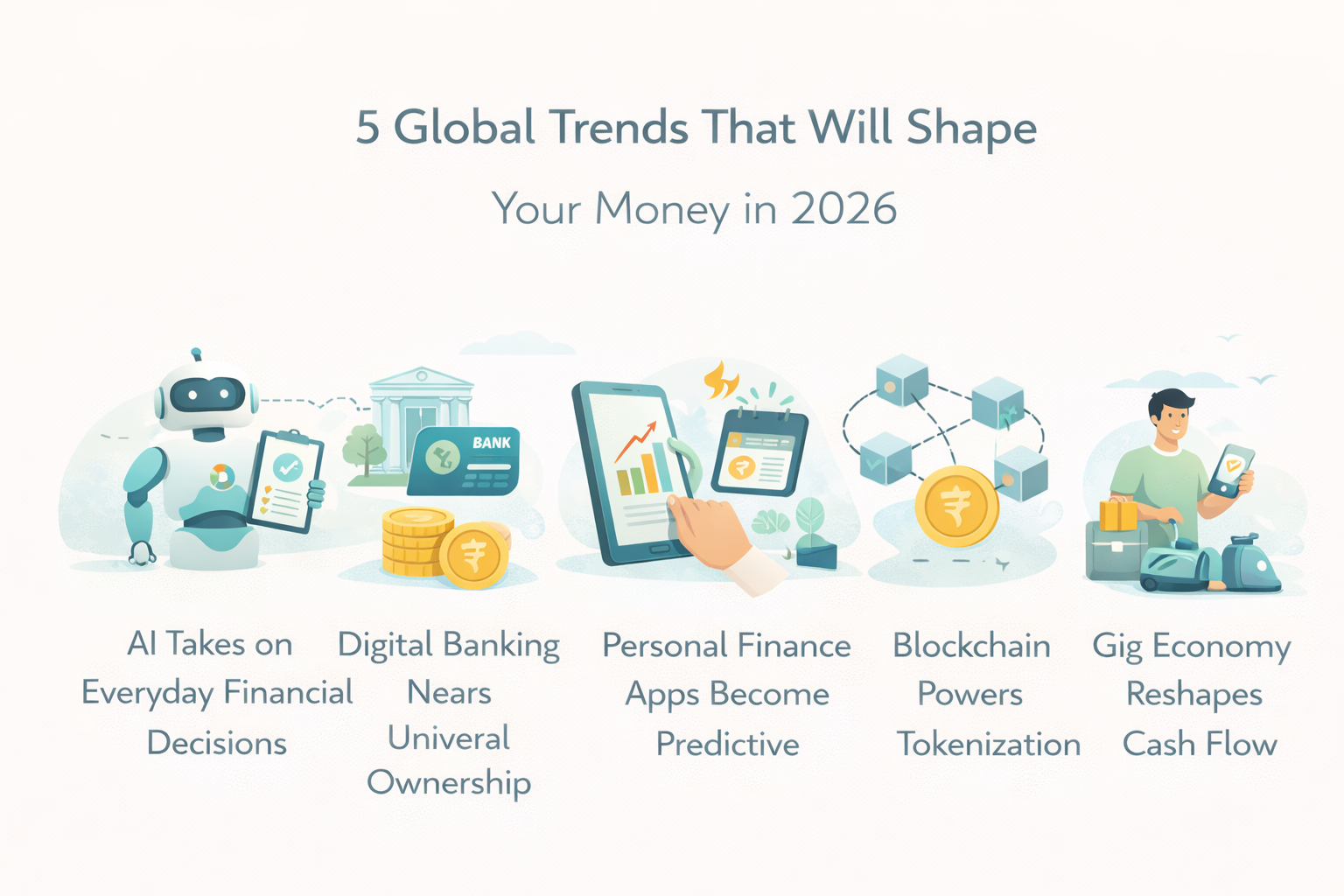
AI Takes Over Personal Finance Decisions
Banks and fintechs rolled out AI agents in late 2025 that now handle loan approvals, fraud flags, and even custom savings plans without human input—cutting processing times from days to seconds. Global trends, AI adoption hit 88% among leading financial firms, saving $120 billion in costs.
What this means for Indian users: Expect hyper-personalized UPI-linked advice via apps like Paytm or PhonePe. For example, skip this Swiggy order, redirect ₹200 to your SIP. Digital lending costs may fall 20–30%, though concerns around opaque decision-making and data bias remain. Action: Opt-in to RBI-regulated AI tools; cross-check larger financial decisions manually.
Digital Banking Hits Nearly 90% Account Ownership Milestone
According to the World Bank’s Global Findex 2025, India’s formal bank account ownership has risen to 89%, up from 77% in 2021. UPI usage now accounts for roughly 54% of digital payments, while government transfers have significantly increased account activity among women. Globally, mobile wallets and neobanks continue to expand, often bundled into “super-app” ecosystems.
What this means for Indian users: Zero-fee UPI international remittances via apps like Wise or new RBI pilots slash Forex costs from 3% to under 1%. Embedded financial products—such as insurance tied to online commerce—are also emerging. At the same time, cyber fraud incidents are up by 40%, reinforcing the need for biometric security and cautious digital behaviour.
Personal Finance Apps Become Predictive, Not Just Reactive
In 2025, personal finance apps evolved from expense trackers into automated financial assistants. An estimated 78% of queries are now handled by AI, with real-time nudges like “Your rent spiked 7%; refinance EMI?” Globally, open-finance systems increasingly link payroll and tax data to streamline credit access.
What this means for Indian users: Apps are beginning to automatically route salaries toward EMIs, SIPs, and savings, potentially increasing savings rates by 10–15% through micro-investments. Wider smartphone penetration has extended these tools into Tier-3 markets. The trade-off is a heavier reliance on algorithms, making it important for users to test automation with small amounts before scaling up.
Blockchain Powers Tokenized Assets and Instant Settlements
2025 saw tokenized bonds and real estate on blockchain systems (BlackRock/UBS pilots), as well as faster cross-border payments using central bank digital currencies in seconds vs days. India’s digital rupee (e₹) expanded in B2B use cases, helping reduce transaction friction.
What this means for Indian users: Fractional access to assets such as gold or REITs is becoming cheaper, with lower minimum investments such as ₹100, with 24/7 trades. Fees: 0.1% vs 1% traditional. New use cases include programmable payments that automate investments or bill settlements. However, regulatory clarity remains crucial, and most retail investors continue to prefer platforms overseen by RBI or SEBI. Diversify 5% here for liquidity.
Gig Economy Reshapes Income—Unstable but Opportunity-Rich
Global Findex notes gig workers borrow more (63% in India) but save less (39%), as platforms like Upwork/UrbanClap grew 25%. AI-based matching is increasingly blurring the line between freelance and full-time work.
What this means for Indian users: New marketplaces linked to ONDC and GeM are creating supplemental income opportunities in the ₹20,000–₹50,000 per month range, but the payments are unpredictable. The flip side is income volatility and limited access to traditional benefits like PF or ESI, making emergency funds and disciplined budgeting more important than ever.
The Bigger Picture for 2026
Taken together, these trends point toward a financial system that is faster, more digital, and increasingly automated. India’s high level of financial inclusion positions users well to benefit, but also raises the importance of data hygiene, security settings, and periodic reviews of automated decisions.
2026 is shaping up to reward digitally fluent users who balance convenience with oversight. Which of these trends excites (or concerns) you the most?
For questions, collaborations, or deeper guidance, write to us at info@nomisma.club.
Disclaimer: This article is for educational purposes and not financial advice.
Leave a Reply