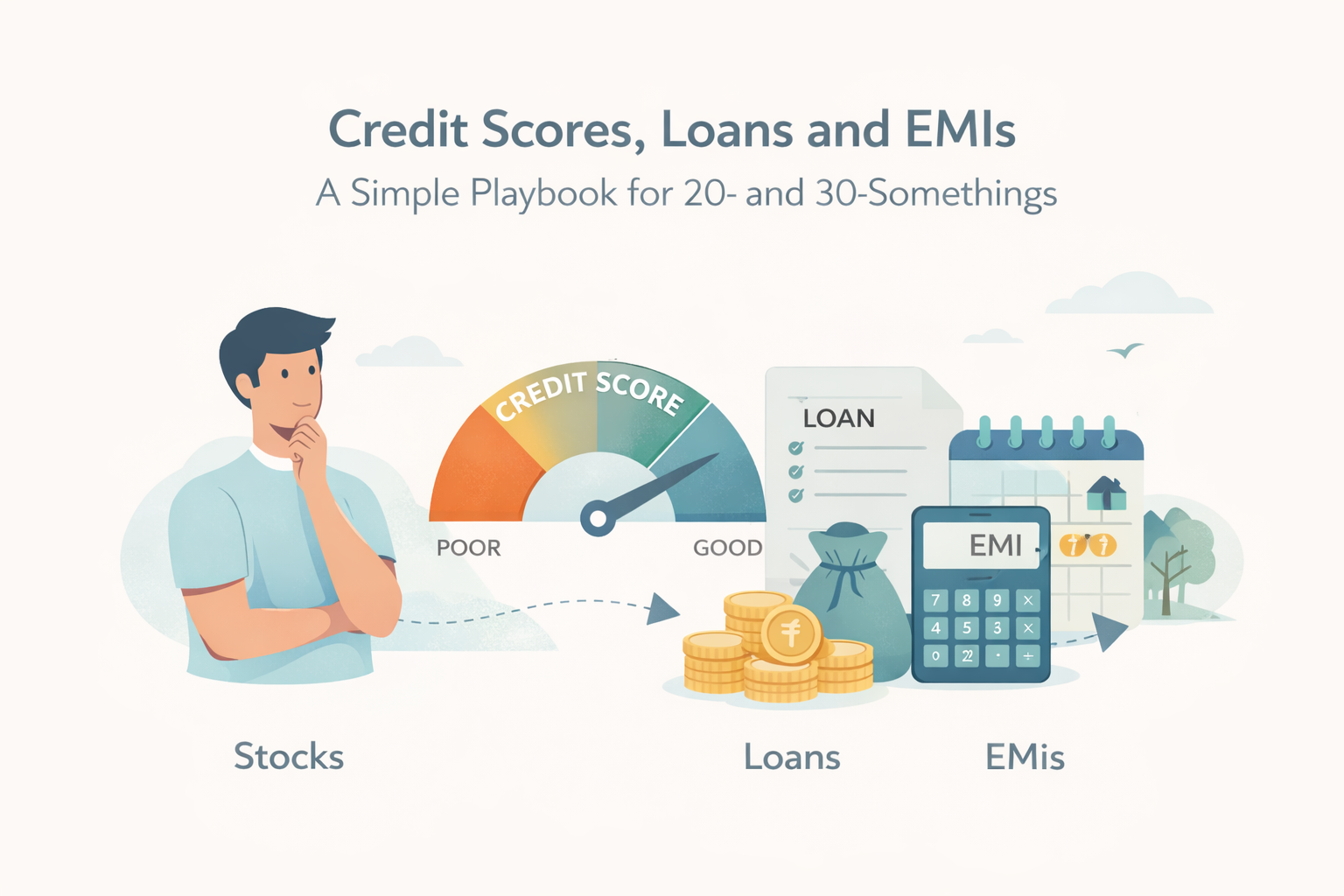
That three-digit CIBIL score (300-900) decides if banks hand you loans at 9% or jack it to 15%, and in some cases, even background checks by employers. Pull your free annual report from CIBIL or Experian—scores dip from late payments, high credit use (over 30% of limit), or too many inquiries. Aim for 750+ by paying bills on time (35% of score), keeping utilization low, and mixing cards/loans. Young professionals see scores jump 50-100 points in 6 months with discipline; ignore it, and you’re stuck with high-interest traps.
Good Debt vs Bad Debt: Borrow to Build, Not Blow
Good debt grows your wealth—like a home loan (8-9% EMI) where property appreciates 8-10% yearly in strong markets, or education loans funding skills that can boost salary. Bad debt? Credit card swipes on gadgets (36-42% interest) or BNPL for clothes that you could’ve saved for—interest compounds faster than your paycheck. Rule: if the asset earns more than the loan rate post-tax, it’s good; else, walk away. 20-somethings thrive by financing only income-boosting stuff.
EMI Math: How ₹10,000 Monthly Shapes Your Future
EMIs (Equated Monthly Instalments) blend principal + interest; a ₹5 lakh personal loan at 12% over 5 years costs ₹11,100/month but totals ₹6.66 lakh paid—₹1.66 lakh pure interest. Use online calculators: shorter tenure saves interest but hike monthly outflow; longer tenures cost more but ease monthly cash flow. For salaried folks, cap total EMIs at 40-50% of take-home—e.g., ₹40k salary handles ₹16-20k EMIs max. Pro tip: prepay 10-20% yearly to slash interest by 25%.
Credit Cards Done Right: Rewards Without the Ruin
Everyone Googles “best credit card for beginners” because rewards (1-5% cashback) beat debit cards, but 80% carry balances paying 3-4% monthly interest. Strategy: spend only what you can pay in full by the due date (use auto-debit), pick one card matching habits—like Amazon Pay, ICICI for shoppers, or Axis Magnus for travellers. Limit to 2 cards total; consider closing unused cards after long inactivity, especially if they charge fees. Nets ₹5-10k yearly value for disciplined users.
BNPL and Quick Loans: The Traps That Snare Young Spenders
Buy Now Pay Later apps such as LazPayLater or Simpl lure with “no interest” but sting with 14-18% fees on defaults or late fees stacking to a 36% effective rate. Cycle hits when one EMI funds another, eating 20-30% of salary. Break free: pause new BNPL, consolidate into one low-rate personal loan (10-12%), build a 3-month buffer first. Post-2024 RBI rules cap BNPL tenures at 3 months—use only for true needs, not wants.
Quick Fixes to Boost Score and Slash Loan Costs Today
Pay everything early (even minimums build habits), negotiate bill extensions with providers, and add a secured card if your score’s low (deposit = limit). Dispute errors on reports (20% have mistakes). For loans, compare via BankBazaar—same ₹10 lakh home loan saves ₹2 lakh interest switching from 9.5% to 8.75%. Track monthly.
Master this playbook, and loans work for you—instead of owning you.
👉 Paying off one high-interest debt this month? Share below. For questions, collaborations, or deeper guidance, write to us at info@nomisma.club
Disclaimer: This article is for educational purposes and not financial advice.
Before You Invest: The Three Rules Every Beginner Breaks
Jumping into “how to start investing” without grasping risk, time horizon, and taxes is like driving without a license—exciting until the crash. Risk means potential loss: stocks swing wildly short-term but climb over decades; gold hedges inflation but rarely beats equities long-haul. Time horizon sets your mix: under 5 years, stick to debt or gold; 10+ years, load up on stocks and mutual funds. Taxes hit hardest on gains—12.5% LTCG over ₹1.25 lakh for equities post-2024, indexation gone for property, gold taxed as regular income if held short. Build an emergency fund first (6 months’ expenses), then allocate.
Stocks for Beginners: Skip the Hype, Buy the Index
Individual stocks tempt with “10x stories,” but most individual stocks underperform indexes over long periods. Start with Nifty 50 or Sensex ETFs via Zerodha—₹5,000 buys you India’s top companies, diversified. Risk: 20-30% drops happen yearly, but holding 7-10 years averages 12-15% returns. No stock-picking skill? Don’t—index beats most pros. Tax edge: LTCG after 1 year at 12.5%.
Mutual Funds for Beginners: SIP Your Way to Wealth
“Mutual funds for beginners” searches explode because pros manage diversification you can’t match solo. Equity funds like thematoc (SBI PSU) or mid-caps (HDFC or ICICI) deliver 15-20% over 5 years via SIP rupee-cost averaging. Start ₹5,000/month on Zerodha Coin; hybrid funds mix debt for stability if markets scare you. Risk scales with equity exposure – high short-term volatility, but time smooths it. ELSS funds save tax under 80C up to ₹1.5 lakh.
Gold Investing: Protection, Not Growth Engine
Gold shines in crises (up 25% in 2024 amid uncertainty), but trails stocks over decades. Buy digital gold on PhonePe (₹100 entry), SGBs (govt-backed, 2.5% interest + tax-free gains), or ETFs—no storage hassle. Risk: no income, just price bets; limit to 5-10% portfolio. Gold is taxed differently depending on the instrument and holding period; check current rules before investing.
Real Estate: The Patient Person’s Asset
“Gold or real estate?” pits liquidity vs leverage—gold wins easy access, property builds wealth via rent + appreciation (8-12% total returns in Tier-1 cities). Start small with REITs (Embassy or Mindspace, 7-9% yields) before buying flats. Risk: illiquid, high upfront (20% down), tenant drama, high stamp duty, and registration costs. Time horizon 7+ years; post-2024, no indexation means higher taxes on sales—calculate via limited deductions post-2024.
Your Starter Portfolio: Mix It Right
Age 25-35? 60% mutual funds/stocks, 20% debt, 10% gold, 10% REITs—rebalance yearly. Use apps like Kuvera for free tracking. Track progress quarterly, not daily. Common trap: chasing last year’s winner. Investing beats saving because inflation (6%) eats FDs; compound 12% instead.
This is a starting point—not a rulebook.
👉Pick one asset, invest ₹10,000 today, and learn by doing. Which are you trying first? Share it in the comments.
Disclaimer: This article is for educational purposes and not financial advice.
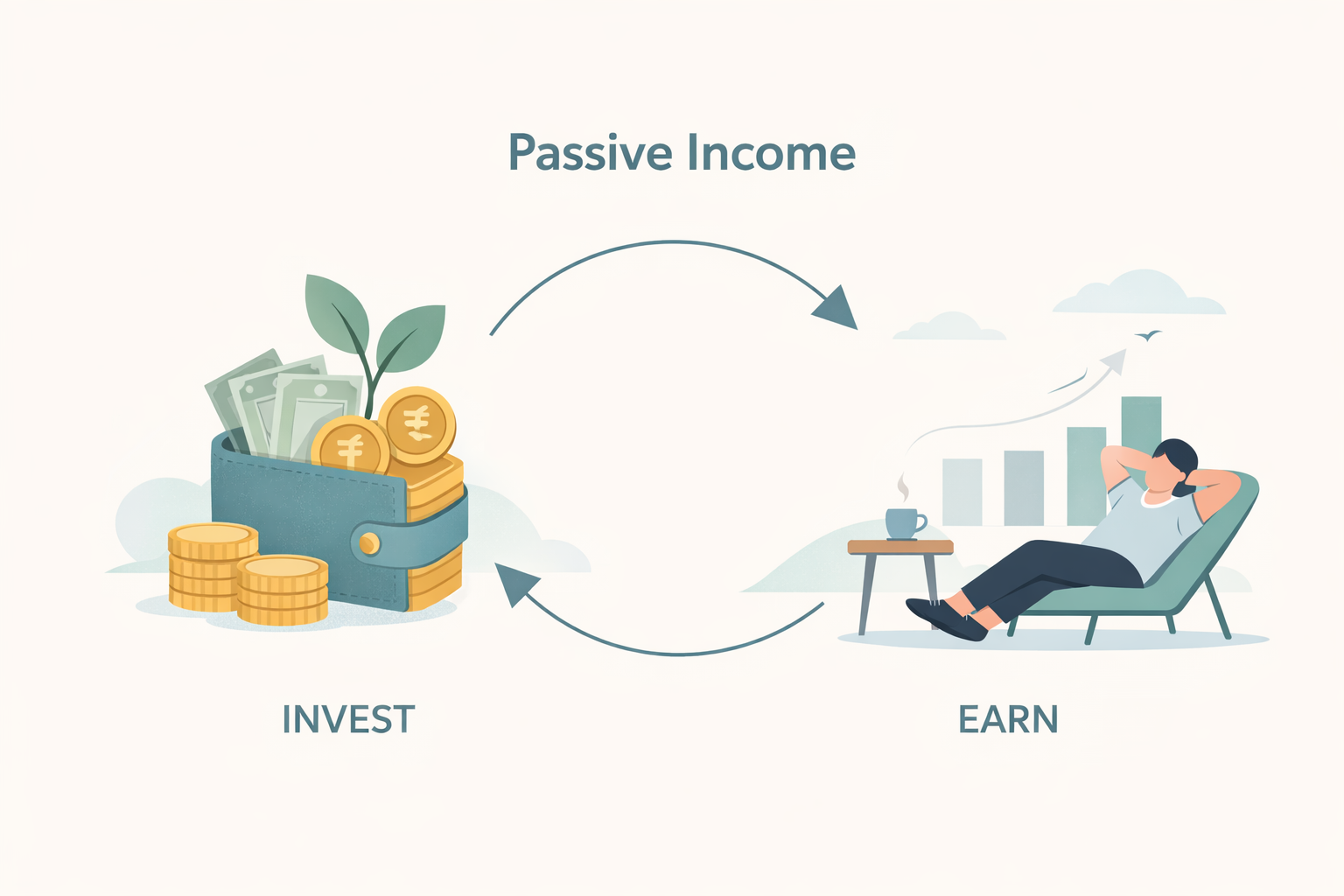
Passive income in India is less about “earn while you sleep” from day one and more about “build a system once, let it pay you for years.” It usually demands upfront time, skill, or capital, but the goal is to reduce how much you trade hours for rupees over time. This guide focuses on ideas that can realistically work in India in 2025, not lottery tickets or overnight riches.
Some of these ideas pay hundreds per month, others can scale into lakhs—but none are instant.
Low‑Effort Ideas (Money > Time)
1. Dividend‑Paying Stocks
Buying shares of solid, dividend‑paying companies can create a small but growing cash flow. When profits are shared as dividends, you get periodic payouts while still holding the stock for long‑term appreciation. Focus on stable businesses with a history of consistent dividends rather than chasing ultra‑high yields that may not be sustainable.
2. Debt Mutual Funds and Target Maturity Funds
Debt funds invest in bonds and money‑market instruments and can offer better post‑tax returns than traditional bank FDs if held for the right period. Target maturity funds (which invest in government and high‑grade bonds to a fixed maturity year) give more visibility on expected yield and reduce reinvestment risk. These work best for investors seeking relatively lower volatility with some inflation-beating potential. Returns depend on interest rate cycles and holding till maturity.
3. REITs (Real Estate Investment Trusts)
REITs let you earn rental‑like income from Grade‑A commercial properties without buying an office or shop outright. Units trade on stock exchanges and typically distribute a large chunk of their income as dividends or interest. They add real‑estate exposure with lower ticket size and better liquidity than owning a physical property.
4. High‑Interest Savings and Sweep‑In Accounts
Some banks and small finance banks offer higher interest on savings or sweep‑in FDs while still letting you access funds quickly. Setting up automatic sweeps (where surplus from your savings account is moved into FDs above a threshold) ensures idle cash earns something without manual intervention. It is not glamorous, but it is a simple way to make your emergency fund work slightly harder.
5. Cashbacks, Rewards, and Co‑Branded Cards
Used smartly, credit cards and reward programs can become a small passive stream in the form of points, miles, and cashbacks. Paying all bills through one or two cards and clearing dues in full avoids interest while maximizing rewards. This is not a primary income source, but over a year the value can materially reduce your travel or shopping costs.
If you can invest some time upfront, the next set of ideas opens up higher upside.
Medium‑Effort Ideas (Some Work, Ongoing Payouts)
6. Rental Income from a Room or Parking Space
Instead of buying an entire rental property, many people start by renting a spare bedroom, storage space, or even a dedicated parking slot. This drastically reduces capital needed compared to a full flat purchase. Once a tenant is found and rules are clear in writing, the income is relatively steady with occasional management effort.
7. Recurring Digital Products (Templates, E‑Books, Planners)
Creating a digital asset once and selling it repeatedly is a classic semi‑passive play. Think budget planners, tax checklists, niche e‑books, or Excel templates for freelancers and small business owners. Distribution can be handled through marketplaces or your own site, and once the product is built, updates are occasional rather than constant.
8. YouTube, Reels, and Content Monetization
Short‑form and long‑form content around finance, careers, or niche hobbies can generate ad revenue, brand deals, and affiliate commissions. The “passive” part comes once older videos keep getting views and paying months later. The upfront grind is real—scripting, editing, and consistency—but the compounding effect of a content library is powerful. This pairs well with affiliate marketing, where older content continues to convert.
9. Affiliate Marketing and Recommendation Blogs
Running a blog or simple website that recommends tools, apps, books, or financial products lets you earn a commission when readers sign up or buy. It fits especially well with money, travel, and tech content, where people actively search for “best” options. Once articles rank and get organic traffic, they can bring in income with only periodic updates.
10. Royalty‑Style Income from Courses
If you have deep expertise—say in tax filing, freelancing, or exam prep—packaging it into a structured course can generate repeated sales. Platforms that handle hosting, payments, and delivery reduce technical friction. After the initial build and a push to get reviews, a well‑positioned course can continue selling with light promotion.
High‑Setup Ideas (Capital or Significant Build‑Out)
11. Traditional Rental Real Estate
Buying a residential property purely for rental income is capital‑heavy but can offer a combination of rent plus long‑term appreciation. True passivity demands doing the groundwork: choosing locations with good demand, screening tenants carefully, and having clear agreements. Net yield after maintenance, vacancy, and tax is what matters—not just the headline rent.
12. Fractional Real Estate and Co‑Investment Platforms
Instead of buying an entire office or warehouse, some investors participate in fractional ownership arrangements. Multiple investors co‑own a commercial property and share rental income proportionally. This reduces ticket size but requires due diligence on platform credibility, legal structure, and exit options.
13. Peer‑to‑Peer (P2P) Lending
P2P platforms allow you to lend small amounts to many borrowers, earning interest over time. Diversification across multiple loans is critical to reduce default risk. This can feel passive once your rules and auto‑invest settings are configured, but it is inherently higher risk than traditional bank deposits. Limit exposure to a small percentage of your overall portfolio.
14. App‑ or Tool‑Based Micro‑Businesses
Building a small app, plugin, or SaaS tool that solves a narrow problem—like invoicing, content planning, or Indian tax calculations—can generate subscription or one‑time sale income. The upfront build is intensive, but maintenance can be modest if the scope is tightly defined. Over time, existing users and word of mouth can turn it into a low‑touch revenue stream.
15. Licensing Your Work or IP
Photographers, designers, writers, and coders can license their creations rather than selling them once. Stock photos, UI kits, code snippets, or even background music can be licensed through marketplaces. The key is building a high‑quality, searchable catalogue that keeps selling long after the original effort.
How to Choose the Right Idea for You
Capital vs time trade‑off: If you are early in your career with limited savings, focus on content and digital products; if you have surplus capital, lean into financial instruments and real estate exposure.
Risk comfort: Debt funds, REITs, and high‑interest accounts sit on the lower‑risk side; P2P lending, individual dividend stocks, and fractional properties need a stronger risk appetite.
Skill leverage: Play where you already have an edge—writing, coding, teaching, design, or real‑estate knowledge—so you are not starting from zero on both skills and systems.
👉Start with one idea, get it working, and only then layer on the next.
Seen this way, “passive income” is less a single hack and more a portfolio of cash flows that slowly decouple your lifestyle from your monthly salary.
Passive income is a portfolio, not a shortcut.
For questions, collaborations, or deeper guidance, write to us at info@nomisma.club
Disclaimer: This article is for educational purposes and not financial advice.
Tired of watching your salary vanish into bills and inflation? In 2026, making your money work for you means shifting from earning to growing—through smart investing, compounding magic, and low-effort income streams. This isn’t about get-rich-quick schemes; it’s practical steps Indians are using to build wealth quietly, even with rupee volatility and rising costs.
How to Start Investing in India: Zero to SIP in 30 Days
Most searches for “how to start investing in India” come from 25-35-year-olds with steady jobs but no clue where to begin. Open a demat account via Zerodha or Groww (free, 10 minutes online), link your bank, and park ₹5,000 in a mutual fund SIP. No stock-picking needed—index funds like Nifty 50 trackers average 12-15% annual returns over 10 years, beating FD rates. Start small; consistency crushes timing.
Compounding: The Secret to Money Making Money While You Sleep
Search “money making money while you sleep” spikes every January because people finally get compounding. ₹10,000 monthly SIP at 12% return becomes ₹1 crore in 20 years—your money earns on earnings. Use an online calculator: at 15% equity returns, ₹5,000/month grows to ₹50 lakhs by age 50. In India, skip FDs (6-7%); favour equity mutual funds or PPF for tax-free compounding up to ₹1.5 lakh/year.
SIPs Explained: The Easiest Way for Salaried Indians to Build Wealth
Systematic Investment Plans top “best SIP for beginners” queries for a reason—rupee-cost averaging buys more units when markets dip. Top picks: Parag Parikh Flexi Cap (18%+ 5-year returns), HDFC Mid-Cap Opportunities. Invest via apps like ET Money; automate deductions like EMIs. For 2026, with RBI rate cuts expected, hybrid funds balance debt safety with equity upside. Aim for 50% salary allocation over time.
Side Hustles That Pay Monthly: Real Passive Income in India
“Passive income ideas India” searches exploded post-pandemic. Freelance writing on Upwork (₹20k-50k/month after 3 months), YouTube shorts on finance tips (monetise at 1k subs), or dividend stocks like ITC (4% yield). Rent out gear on Rentomojo or park cash in REITs (8-10% rental yields, NSE-listed). Low-entry: sell digital planners on Gumroad or affiliate with Amazon via Instagram Reels. Scale one to replace 20% of your job income.
Basic Asset Allocation: Your 2026 Portfolio Blueprint
Don’t chase gold or crypto blindly—”asset allocation for beginners India” gets 10k+ monthly hits. Rule: 100 minus your age in equities (e.g., 30-year-old: 70% stocks/MFs, 20% debt/FDs, 10% gold/digital gold). Rebalance yearly. This setup weathers market dips (Nifty fell 20% in 2022, recovered 50% by 2025) while growing steadily. Track via Google Sheets: inflows, returns, taxes. (Course on this coming soon)
Common Mistakes Indians Make (And How to Dodge Them)
High FD loyalty kills growth—switch 30% to equities. Ignoring LTCG tax (12.5% over ₹1.25 lakh gains post-2024 budget) erodes profits. Skipping the emergency fund (6 months’ expenses in liquid funds) forces panic sells. Fix: Emergency fund first, then SIPs; use 80C deductions (ELSS funds). Review quarterly, not daily.
Ready to act? Pick one step today—open that demat, set a ₹1,000 SIP, or list a side hustle. Your future self (and rupee) will thank you. What’s your first move? Drop it in the comments. For any queries, write to us at info@nomisma.club