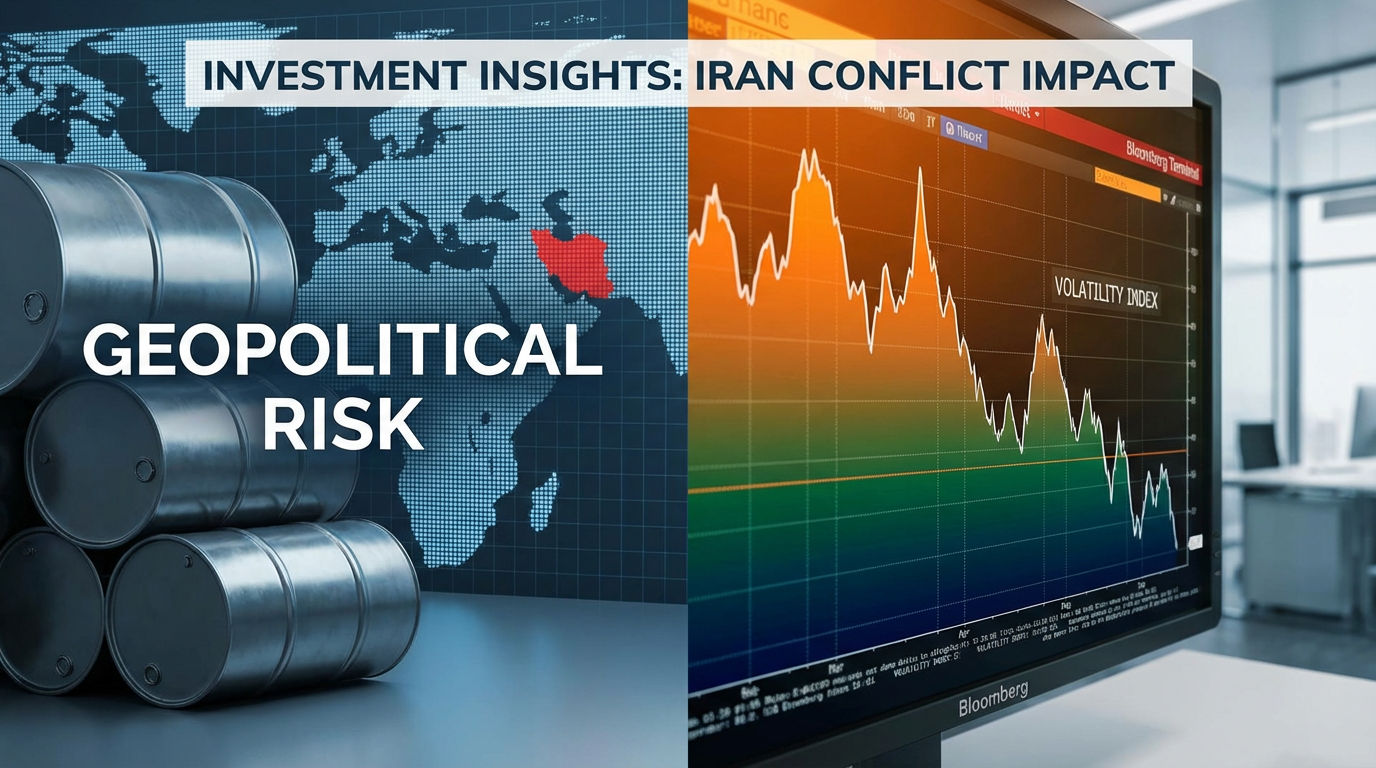
The Iran-US conflict has jolted markets: oil surged to eight-month highs, gold hit records, and Asian indices sold off sharply. For investors, the question is no longer whether the conflict matters—it’s what to buy, what to avoid, and how the energy shock will shape returns.
How the Iran Conflict Affects the Stock Market
U.S. stocks have shown surprising resilience. Trefis explains that America’s energy independence—it’s now the top oil and gas producer, exporting more than it imports—creates a buffer against global supply shocks. The S&P 500 experienced intraday volatility but often recovered. In contrast, South Korea’s KOSPI fell as much as 12% in one day and Japan’s Nikkei dropped nearly 6%, since 70–80% of their oil and LNG flows through the threatened Strait of Hormuz. Global capital is shifting into U.S. equities as a safe haven.
Reuters reported that U.S. stocks pulled back as Iran war concerns deepened, with the VIX volatility index surging to three-month highs. CNN noted stocks recouped some losses but closed lower as Middle East conflict stirred volatility.
What to Buy: Energy, Defence, Safe Havens
Invezz frames the main wartime positioning around four areas: energy producers, defence contractors, gold and other havens, and high-quality income plays.
Energy: About 20–25% of global seaborne crude flows through the Strait of Hormuz. Goldman Sachs notes traders are demanding roughly $14 more per barrel as a risk premium. Large, cash-generative oil companies—Exxon Mobil (XOM), Chevron (CVX), ConocoPhillips (COP), APA Corporation (APA), Diamondback Energy (FANG)—benefit as valuations had assumed lower prices. Reddit has been bullish on XLE, the Energy Select Sector ETF, which gained 27% YTD on Iran-Israel tensions.
Defence: Defence and aerospace stocks often outperform during conflicts as orders for missiles, aircraft, and radar rise. Analysts point to companies providing Patriot and Iron Dome–family air-defence systems that directly counter Iranian threats.
Safe havens: Gold, US Treasuries, the Swiss franc, and the Japanese yen. As Reuters reported, investors made a “dash for cash” as the Iran crisis upended markets—”oil and the dollar are the only two things that people want to own right now,” one analyst said. Money market funds attracted heavy inflows as investors de-risked from stocks, bonds, and even gold.
What to Avoid
Reuters warns that energy-import-dependent countries face severe headwinds—South Korea’s market fell 12% amid the oil spike. Invezz notes that consumer discretionary stocks may struggle as higher oil prices hit airlines and retailers; travel and leisure have sold off as flight routes are disrupted and fuel costs climb. Emerging-market oil importers are vulnerable as higher import bills widen deficits and pressure central banks.
How the Energy Market Will Affect Your Investments
Brent crude jumped 6–8% to around $77–78 per barrel, with European natural gas futures spiking 38% and diesel up 12–18%. Fortune reported that Goldman Sachs’ head of oil research, Daan Struyven, said market pricing suggests traders are betting on a disruption lasting about four weeks. Goldman raised its Q2 2026 Brent forecast by $10 to $76 and warned oil could reach $100 if Hormuz volumes stay disrupted for five or more weeks.
Lombard Odier outlined two scenarios: in a limited escalation, oil rises have negligible impact on U.S. inflation and growth; in a severe case, oil could rise $50/barrel, creating stagflationary pressure. Both expect oil to revert toward recent ranges within six months if the conflict eases.
What Investors Are Saying
Forum and analyst sentiment is split. Some see oil and energy as the clear winners; others stress that de-escalation could come faster than feared, given Iran’s weakened position and global interest in avoiding a prolonged oil shock. The consensus: portfolios tilted toward energy, defence, gold, and high-quality income—while staying diversified and liquid—are best placed to navigate heightened geopolitical risk without over-betting on any single outcome.
Bottom Line
The Iran-US conflict has put energy, defence, and safe havens in focus—and consumer discretionary, airlines, and EM importers in the penalty box. How long it lasts matters: Goldman’s oil research suggests four weeks is priced in; prolonged Hormuz disruption could push oil toward $100. Stay diversified, avoid panic selling, and position for volatility rather than betting everything on one outcome.
Leave a Reply