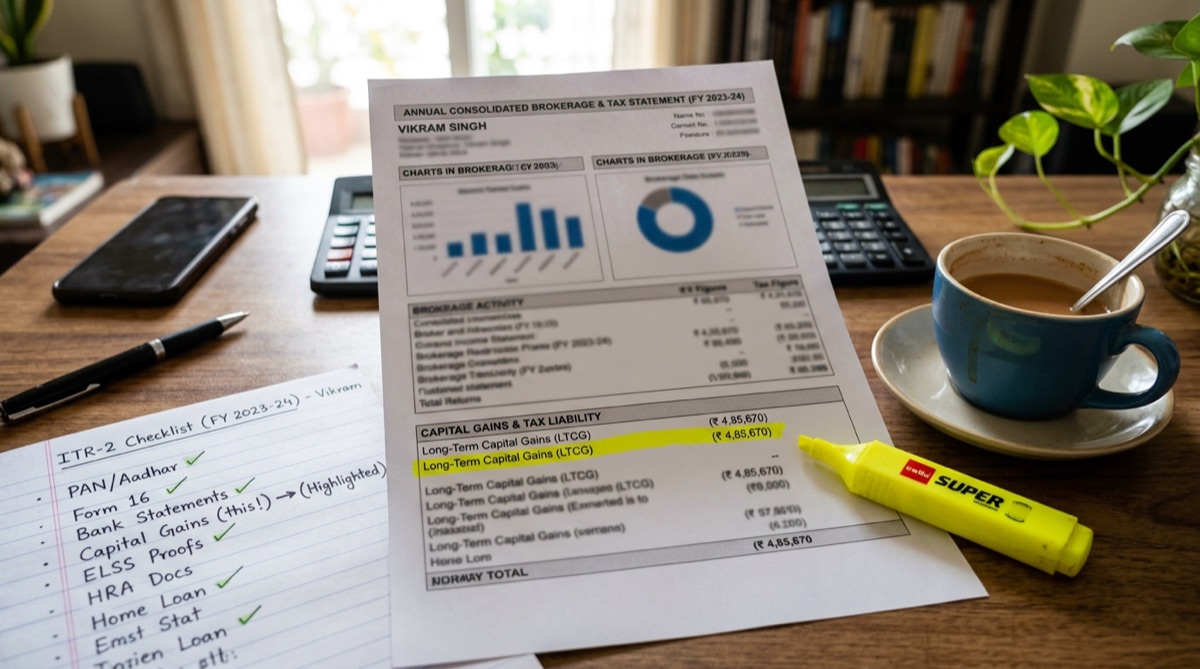
Salaried taxpayers often assume Form 16 is the whole story—until they sell mutual funds, ESOPs, or a second property and discover capital gains reporting sits in a different lane. This checklist orients you for ITR 2025–26 / AY 2026–27 style filing (labels vary by notification year); always verify current ITR schedules, cost inflation indices, and set-off rules from the Income Tax Department and your CA.
1) Separate salary from capital gains in your head
Salary is usually TDS-reported via Form 16. Capital gains often arrive from brokers (capital gains statements), RTAs, or property buyers’ TDS certificates. Mixing them up leads to under-reporting or double confusion when AIS/Form 26AS shows securities transactions.
2) Know your buckets: STCG vs LTCG
Broadly (simplified):
- Listed equity / equity MF: holding period tests determine short vs long; LTCG above a statutory exempt threshold has been subject to specific rates in recent Finance Acts—verify the active rate and exemption for the year.
- Debt MF / others: different holding tests and tax treatments may apply—do not assume equity rules.
Official ITR utility schedules list where each line belongs; if you trade actively, consider professional help for business income vs capital gains characterisation.
3) Brokerage and RTA statements: reconcile to AIS
Download AIS and reconcile sell dates, quantities, and amounts to broker PDFs. Discrepancies are common; timely correction requests beat notices later.
4) Loss set-off basics (high level)
Capital loss carry-forward and set-off rules are statutory and year-specific. Some losses cannot offset certain gains—your CA’s software encodes this more safely than a forum post.
5) Foreign assets and RSU/ESOP complexity
If you have foreign brokerage accounts or RSUs in a multinational, FX conversion dates and perquisite reporting may interact with capital gains. This is not DIY territory for many filers.
6) When property reporting overlaps
If you sold land or building, buyer TDS (206AB/194-IA family), stamp duty values, and improvement cost proofs matter. See property, gifts, and transfer tax map for the adjacent checklist.
7) Regime choice interaction
If you are toggling old vs new tax regime, capital gains taxation and surcharge slabs can interact with your overall computation. Read old vs new regime salary checklist alongside this piece.
Bottom line
Build a single folder per financial year: Form 16, AIS, broker capital gains reports, purchase deeds, improvement invoices, and TDS certificates. Start early—July rush is when mistakes spike.
Educational only—not investment, legal, or tax advice. Verify rules for the applicable assessment year with official law and a qualified tax professional.
Leave a Reply