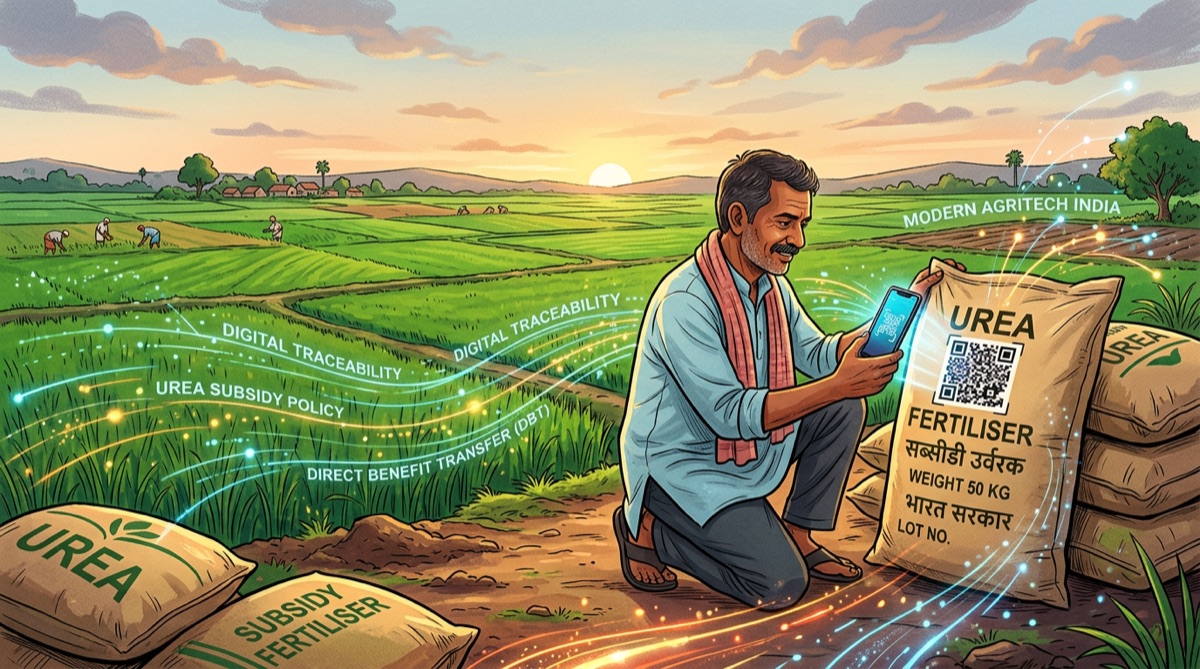
India’s fertiliser subsidy regime historically battled leakage and diversion. Digital traceability—sales points, identity checks, and app-based records—aims to ensure subsidised urea reaches genuine farmers. For investors, this is less “buy agri stocks” and more India Stack–style governance case study: identity + transaction rails reducing fiscal waste.
Policy stack in plain English
Government sets maximum retail prices for certain fertilisers while reimbursing manufacturers/importers via a subsidy mechanism. If physical urea moves across borders or into industry without entitlement, fiscal loss rises. Digital tracking tightens the chain from point of sale upward.
What changes for farmers (high level)
More steps at purchase can create friction unless UX and rural connectivity keep pace—policy design trade-offs matter for political sustainability, not only fiscal math.
Investor read-through (optional, speculative)
Second-order effects might touch logistics software, POS hardware, and compliance consulting—highly uncertain and company-specific. Avoid thematic bingo cards.
Governance link to macro narrative
Fiscal efficiency narratives sometimes sit beside GDP quality debates—India GDP rank context.
Bottom line
Digital urea tracking is public finance hygiene tech. Respect it as such—verify claims against department of fertilisers circulars, not viral reels.
Educational only—not investment, legal, or tax advice.
Leave a Reply