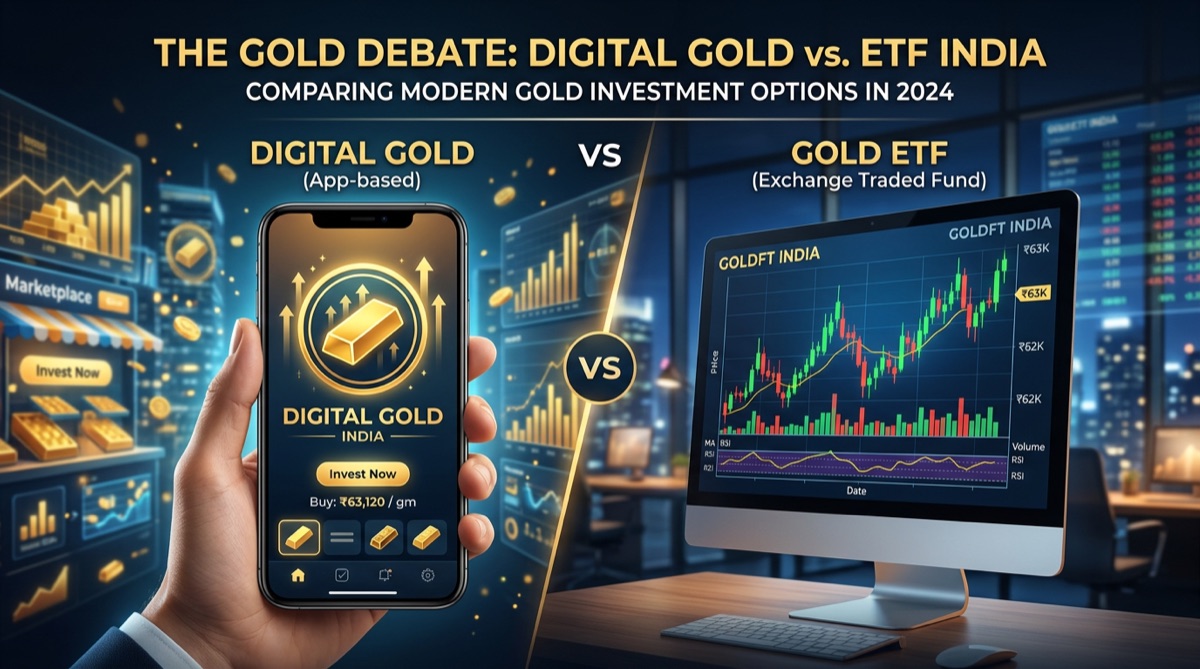
Indian investors can access gold price exposure through digital gold apps, sovereign gold bonds (when open for subscription), gold ETFs, and fund-of-funds. This article compares digital gold vs gold ETFs on costs, custody, liquidity, and tax angles at a high level—verify tax with your CA before acting.
Digital gold: spreads, GST, and counterparty
App-based digital gold often quotes convenience but embeds buy/sell spreads and historically attracted GST on the metal component of the purchase (verify current law). Custody is vendor-dependent—read trustee/custodian disclosures.
Gold ETFs: expense ratio and tracking error
ETFs charge an expense ratio and can suffer tracking error versus domestic gold benchmarks. You need a demat + broker stack; liquidity is generally exchange-driven.
Liquidity mental model
ETFs trade in market hours with visible bid-ask. Digital gold platforms vary in redemption mechanics (physical delivery options, sell-back spreads).
Taxation snapshot (non-exhaustive)
Listed ETF taxation follows securities law categories in force for your holding period; digital gold may be treated differently—this is a fast-moving area, so use official CBDT FAQs and professional advice.
Link to borrowing context
If gold is also collateral for loans, do not double-count the same jewellery as both “investment” and emergency liquidity—see gold loan vs personal loan.
Retirement diversification
Small gold sleeves sometimes sit in longevity portfolios—retirement checklist.
Bottom line
Pick wrappers based on horizon, tax, fees, and operational hygiene—not based on which app advertises most on IPL. For many investors, one simple gold sleeve beats three overlapping ones.
Educational only—not investment, legal, or tax advice.
Leave a Reply